Goodwood Revival
Each September, a stretch of West Sussex countryside performs a kind of magic trick.
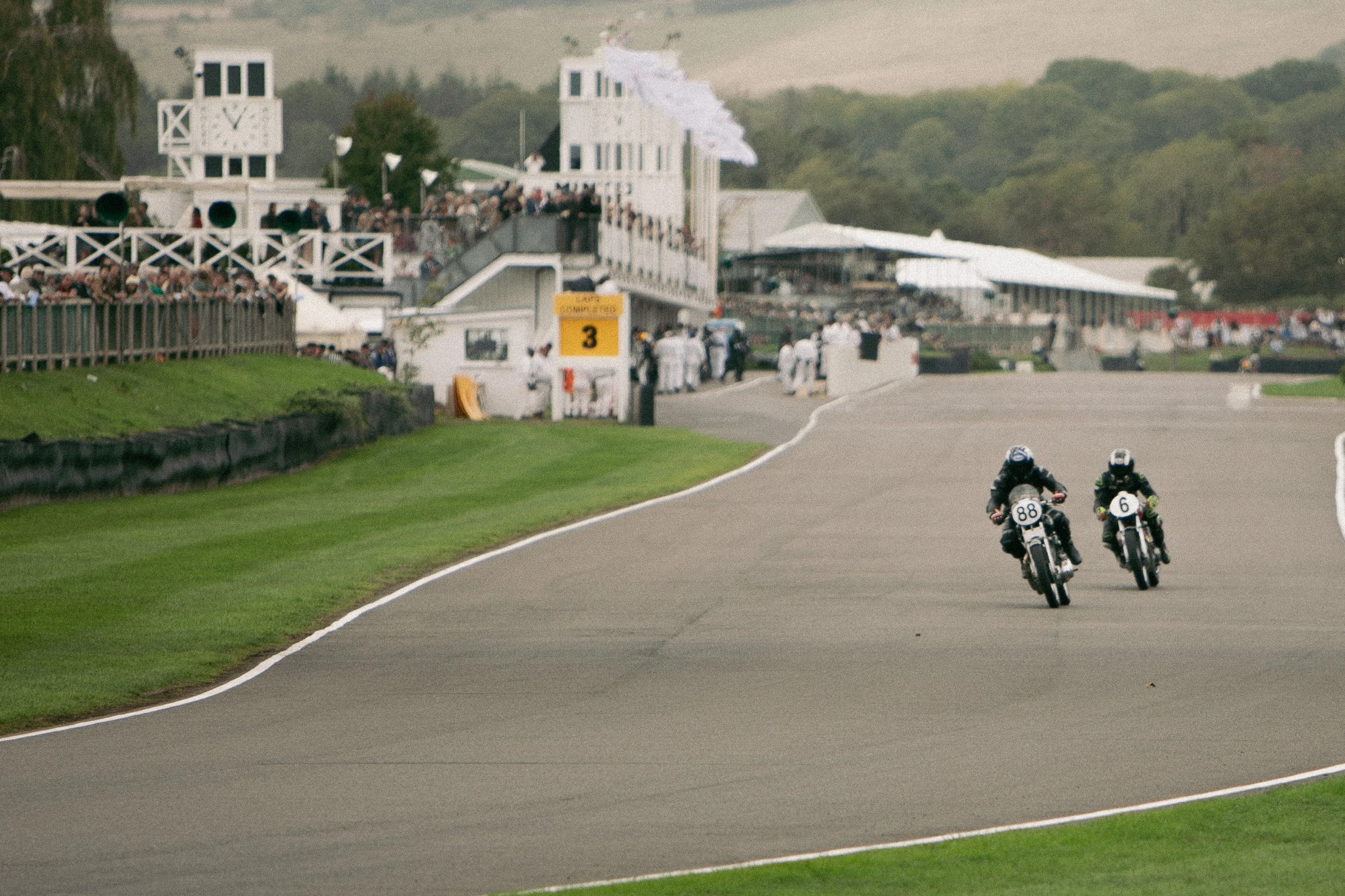
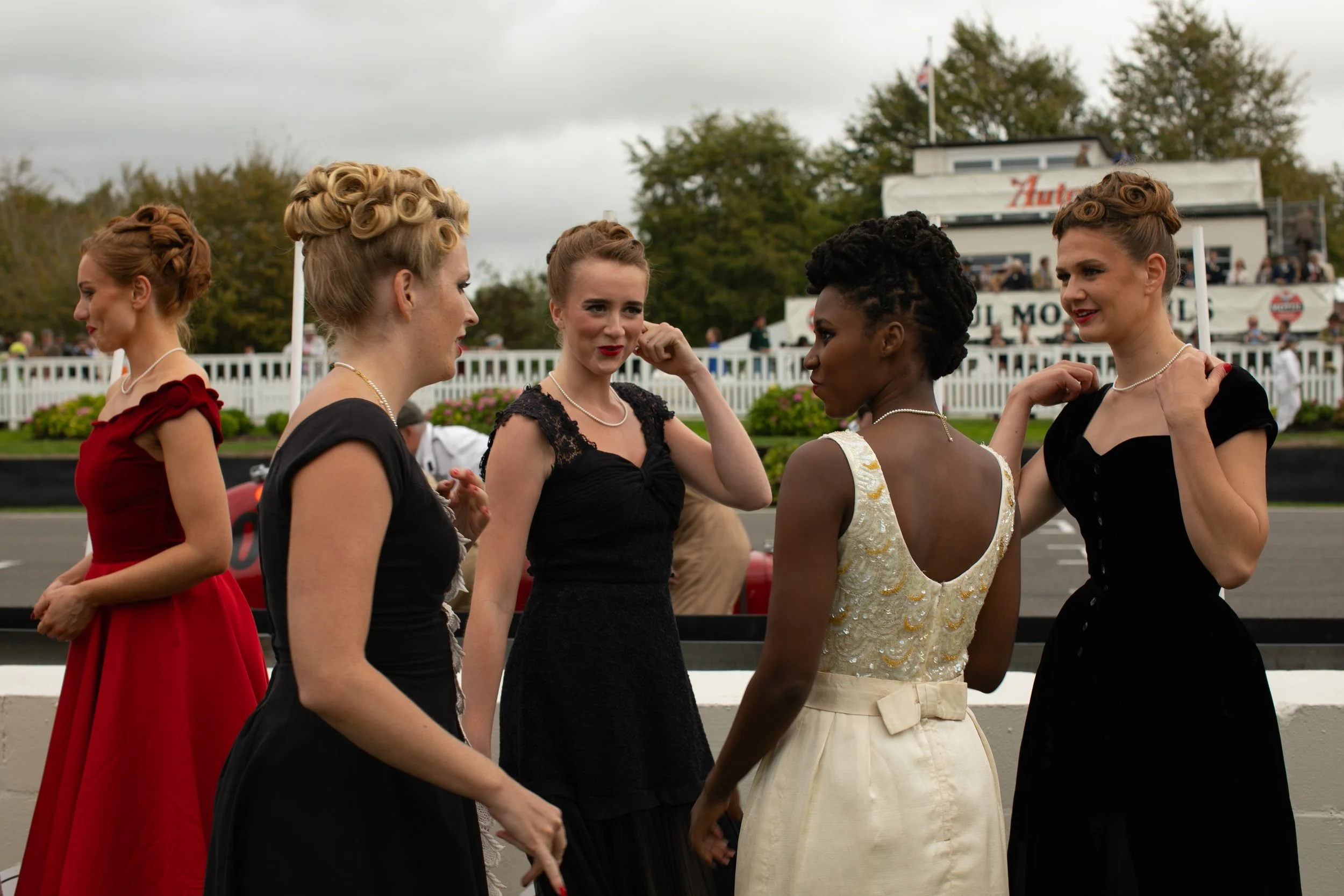
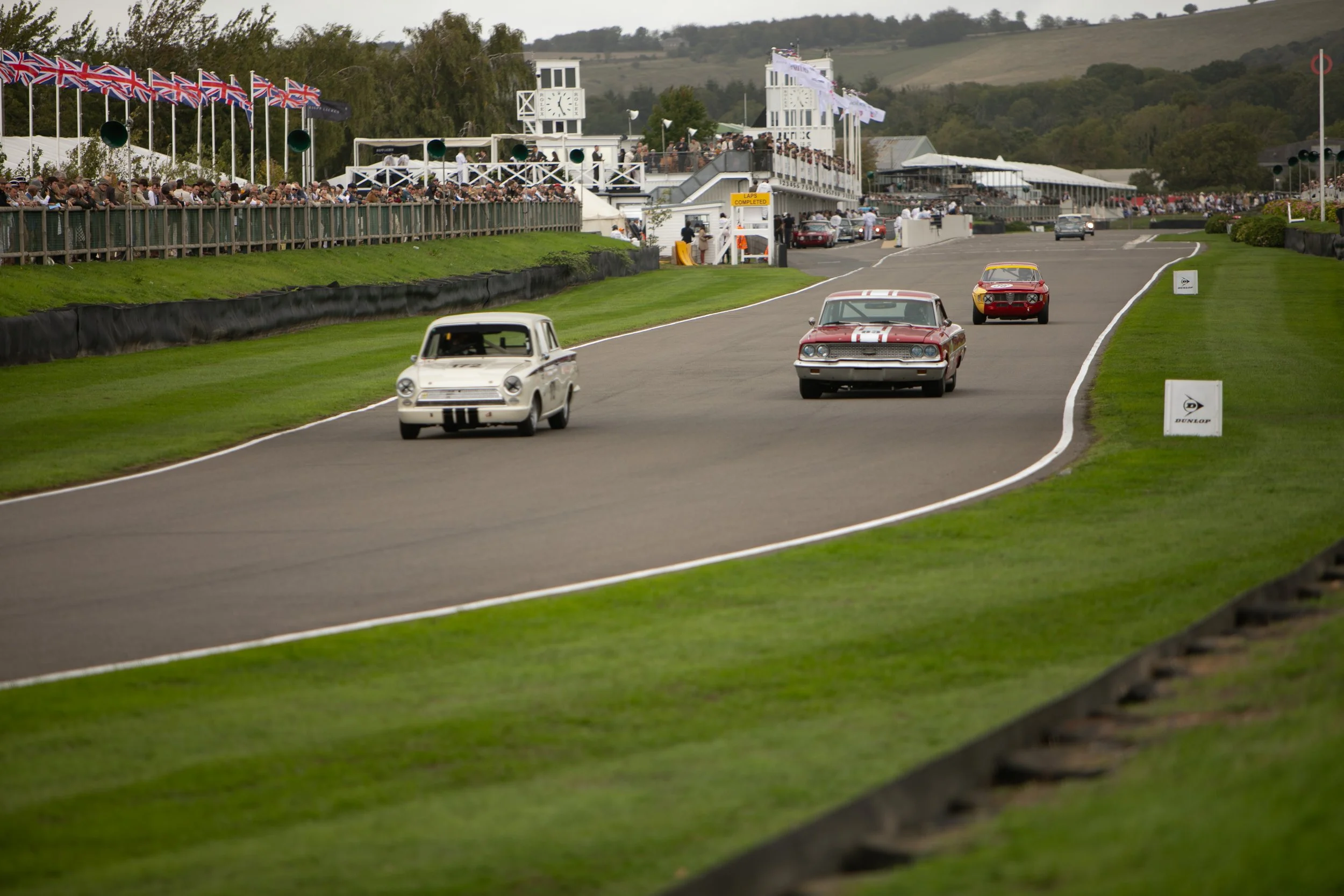
Overnight, the Goodwood Motor Circuit sheds every trace of the 21st century, the signage disappears, the paddocks fill with pre-1966 racing machinery, and hundreds of thousands of visitors arrive dressed as if they've stepped out of a black-and-white newsreel. This is the Goodwood Revival, and it remains one of the most singular events on the world's motorsport calendar: not simply a historic race meeting, but a full-scale act of immersive time travel.
The Goodwood Revival was launched in 1998 by Charles Gordon-Lennox, the Duke of Richmond, on a circuit with a genuinely storied pedigree. Goodwood Motor Circuit had opened in 1948 on the perimeter road of a former RAF fighter station, and through the 1950s and early '60s it hosted some of the greatest names in motor racing as Stirling Moss, Jim Clark, Juan Manuel Fangio, before closing to top-flight racing in 1966 on safety grounds. For three decades the track lay dormant. When the Gordon-Lennox family decided to revive it, they made a deliberate and unusual choice: rather than simply reopening the circuit for modern racing, they would freeze it permanently in the era before its closure.
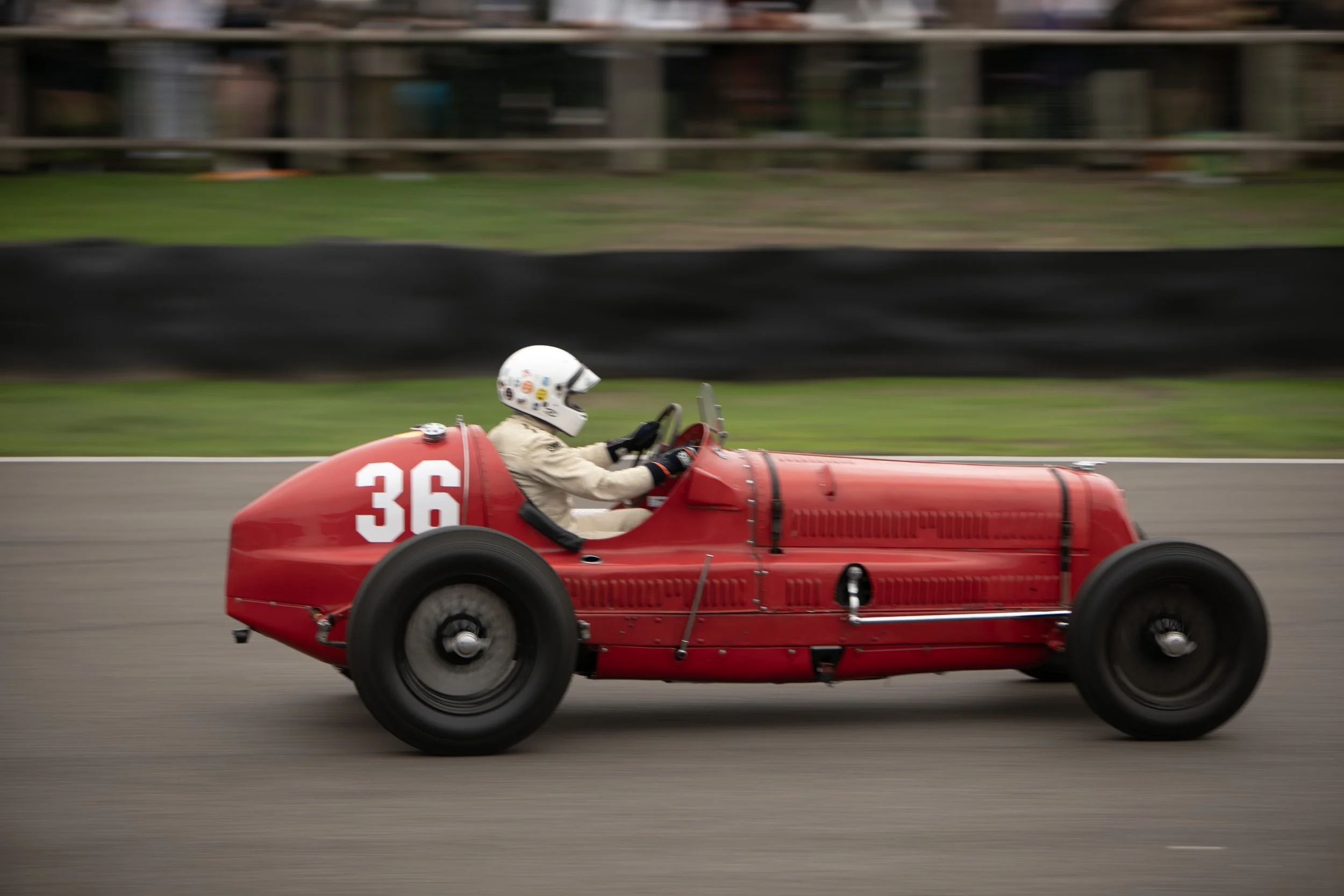
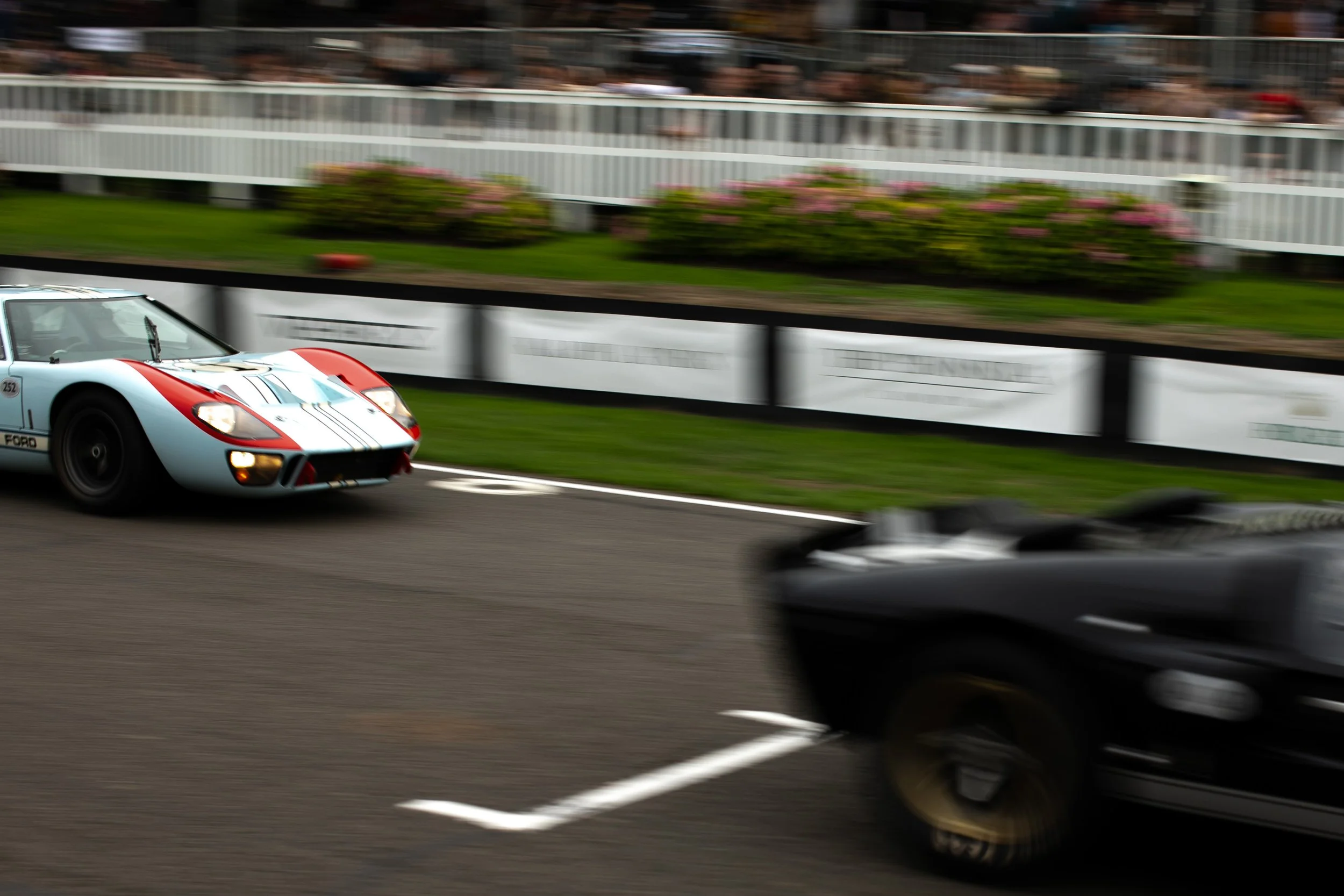
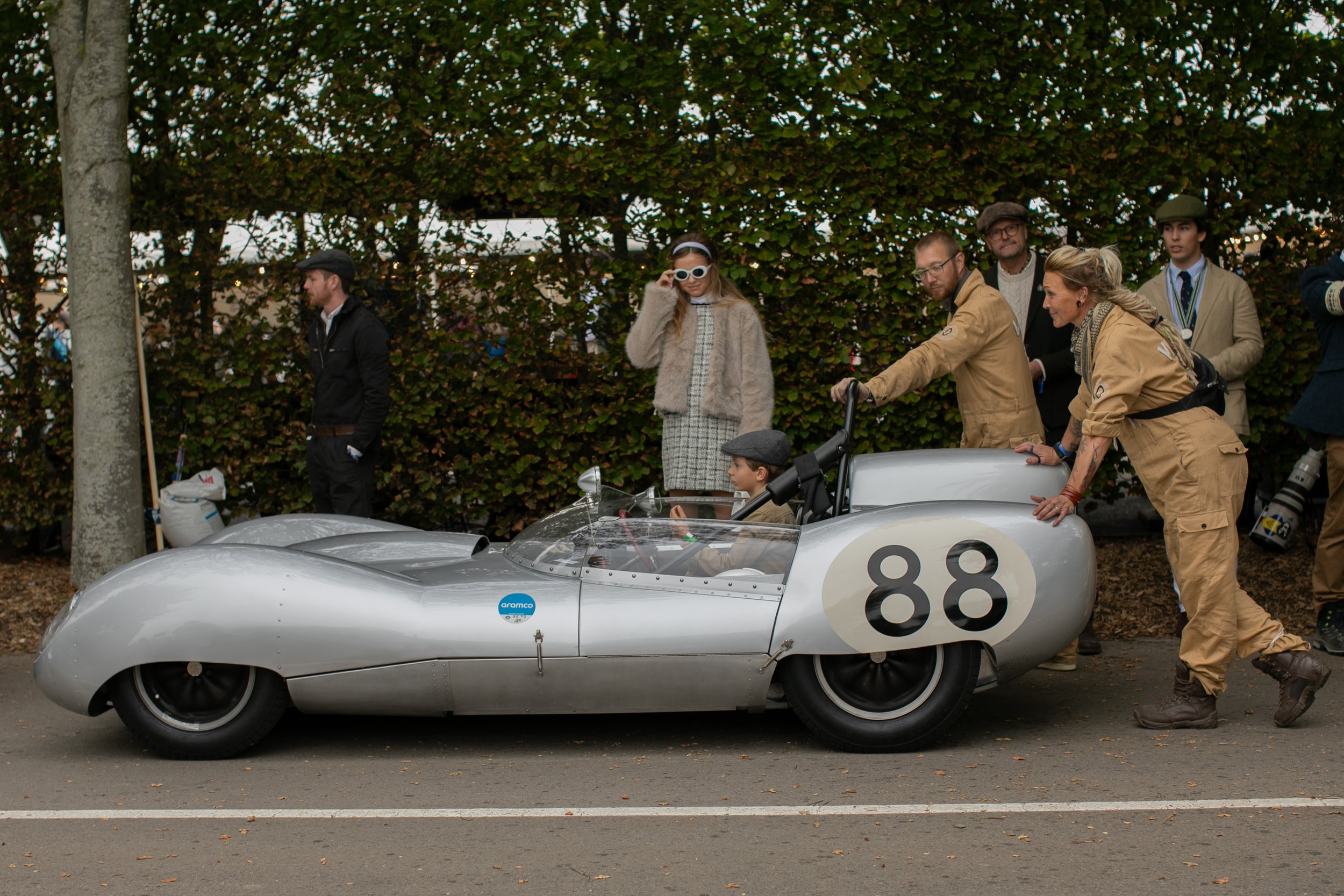
That single decision is what separates the Revival from every other historic race meeting. Silverstone Classic and the Le Mans Classic showcase old cars on modern infrastructure; Goodwood insists that everything cars, costumes, shopfronts, aircraft, music, even the food vendors, belong to the period between roughly 1948 and 1966. It's a strict and carefully policed aesthetic, and it's precisely what has made the event a cultural phenomenon far beyond the world of motorsport, but beneath the theatre, the Revival is still, first and foremost, a serious historic motor race meeting. The cars on track are frequently worth eye-watering sums genuine ex-works Jaguars, Astons, Ferraris and Maseratis, driven hard without exceptions.
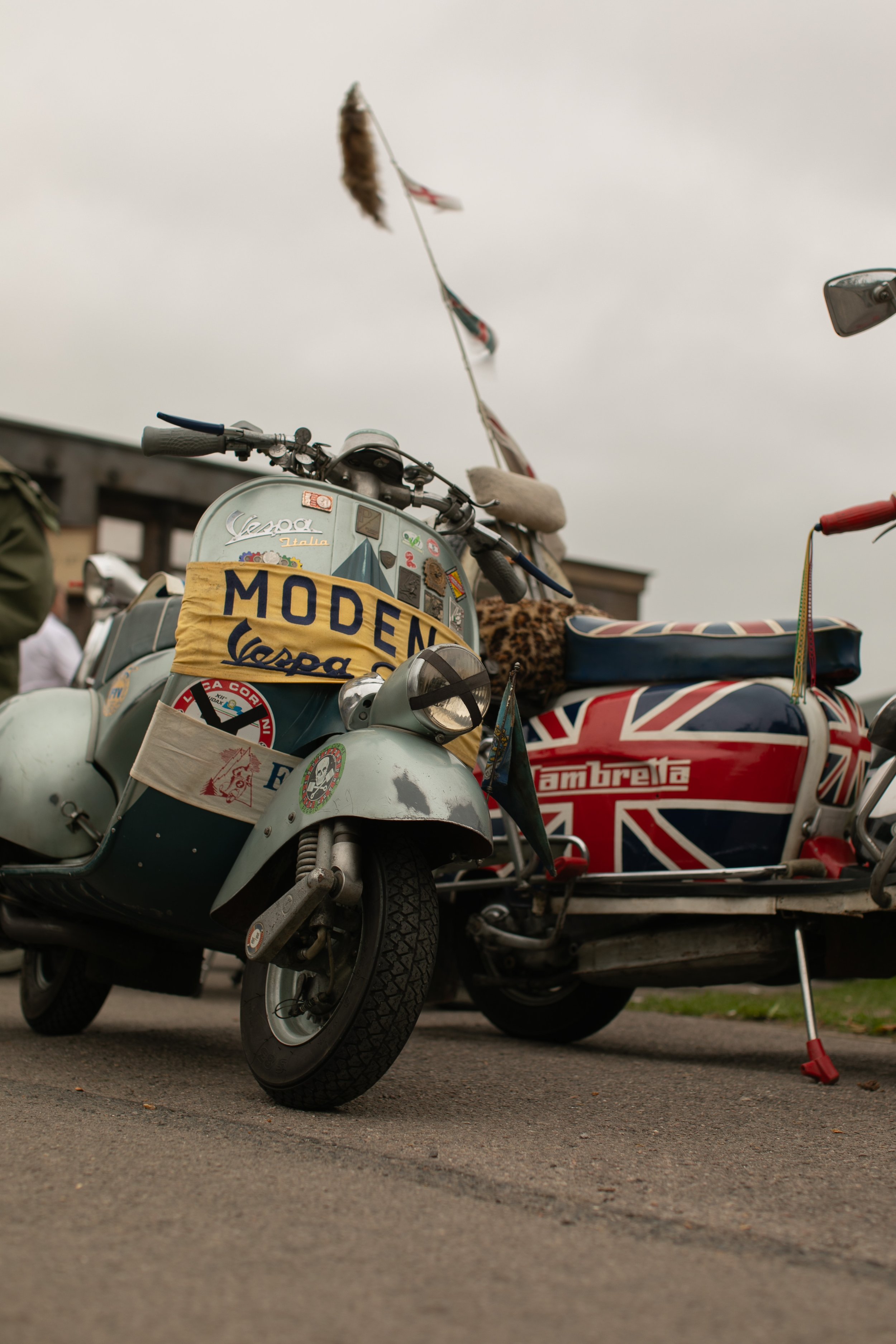
This year's edition carries an Italian theme marking 100 years of Maserati's racing success, alongside a "swarm" of around 300 pre-1967 Vespas taking to the track each morning to tribute the 80 years from its foundation, and a tribute to Barry Sheene marking the 50th anniversary of his first 500cc world championship.
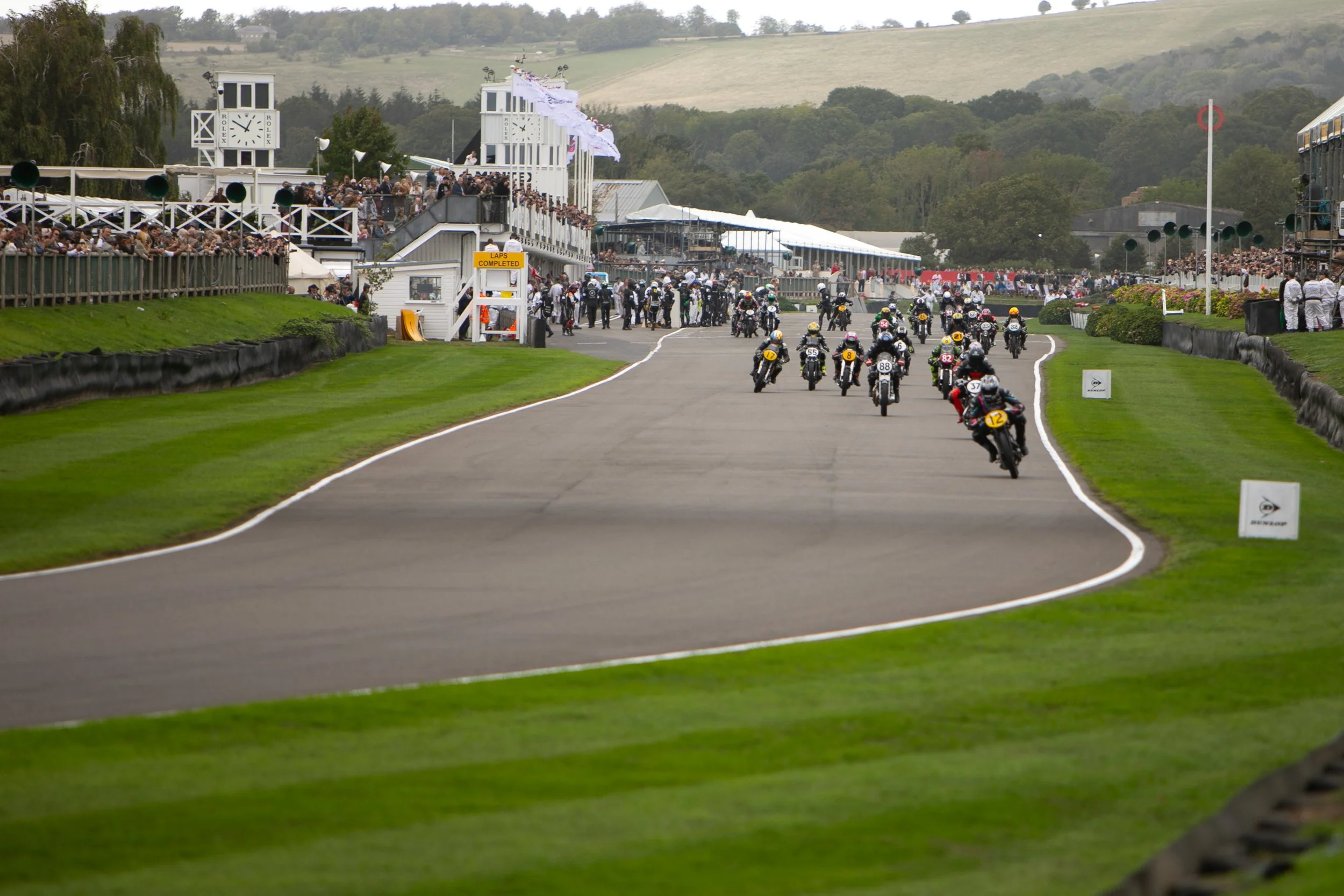
Barry Sheene Memorial
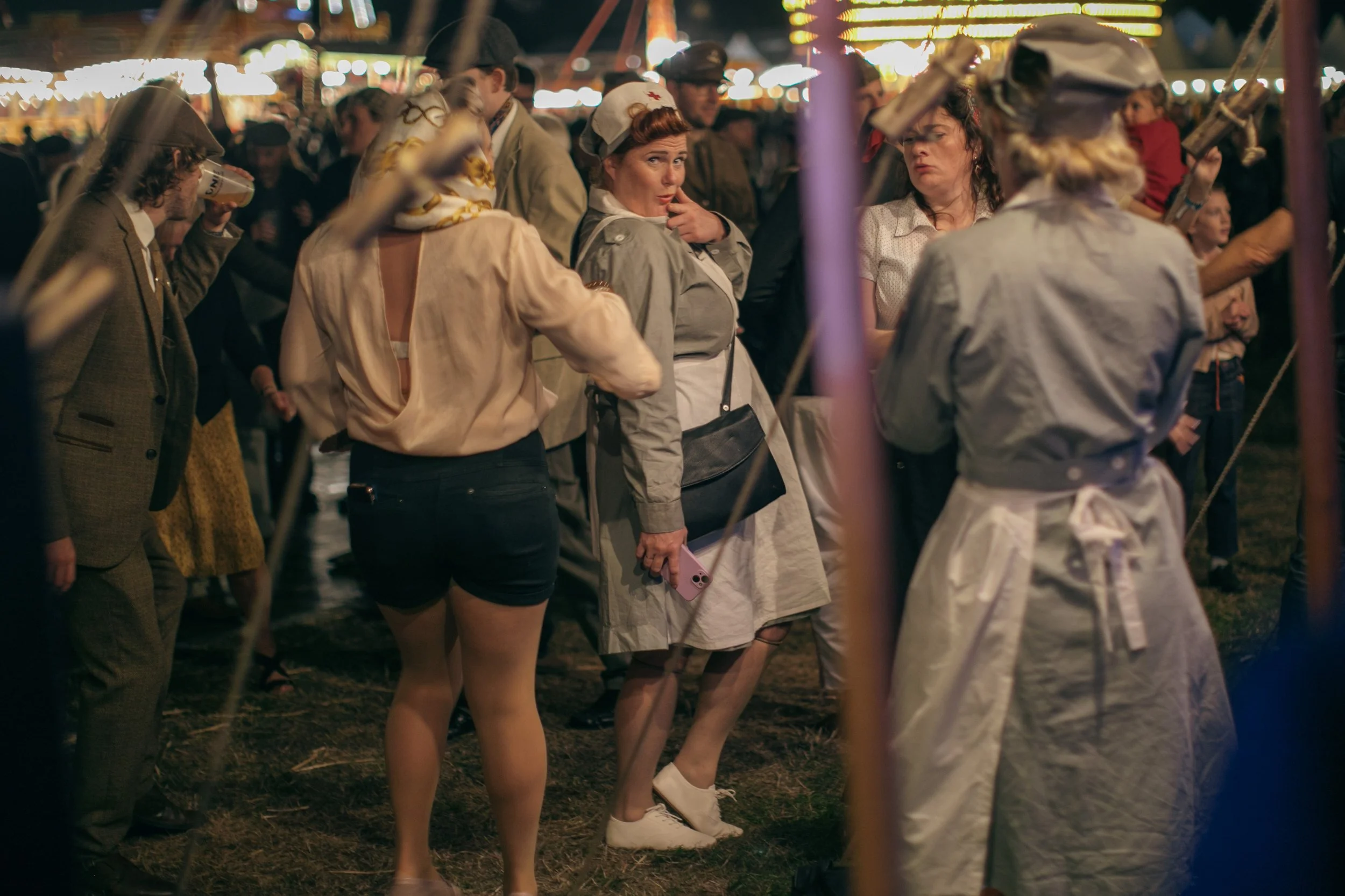
Notably on a more sensitive matter the Revival has also used its platform to make broader statements. In 2024, it became the first historic motorsport event to ban the use of synthetic fuels across all races, part of a wider "Make, Do and Mend" ethos that runs through the event, a nod to wartime thrift that now doubles as an early example of historic motorsport holding onto sustainability without abandoning its love of internal combustion. Nearly three decades on, what makes the Revival endure isn't nostalgia alone, plenty of events sell nostalgia. It's the completeness of the illusion. Most "vintage" events let the seams show, Goodwood works hard to remove those seams. The signage, the shopfronts, the vehicles in the background, even the staff's uniforms are held to the same 1948–1966 window as the headline race cars. That consistency is what turns a themed weekend into something closer to a functioning alternate reality, and this really matters because it changes what the event asks of you. A costume party asks you to perform the past for a few hours and then go home. The Revival asks you to inhabit it, to walk through a 1950s high street, walk into a hair salon or dance to Elvis hits and queue for a race using period money-handling gimmicks, all without a visible reminder that it's actually the present day. That's a much rarer and harder thing to sustain across three days and 100,000-plus visitors, which is why so few other events have managed to copy it successfully.
The payoff differs depending on who you are. A motorsport purist gets to watch genuinely valuable, ex-works racing cars driven in anger rather than parked behind rope, real competition, real risk, not a parade lap. Everyone else gets something closer to theatre: a weekend where the ordinary rules of time don't apply, and an entire corner of England quietly agrees to play along.